Understanding Lexile Reading Levels
When it comes to measuring a student’s reading ability and matching them with appropriate texts, Lexile reading levels are a trusted standard. Developed by MetaMetrics, the Lexile Framework evaluates both the reader’s skill and the complexity of a text using a numeric scale. These scores help parents, teachers, and students choose books that provide the right amount of challenge and support.
Why Lexile Levels Matter in Education
Lexile 2nd grade reading level make it easier to track reading growth over time. Instead of relying solely on grade-level expectations, Lexile scores provide more accurate insight into a student’s reading ability. They are often used in schools to set goals, monitor progress, and choose reading materials that are neither too easy nor too hard.
Lexile Reading Levels by Grade Chart
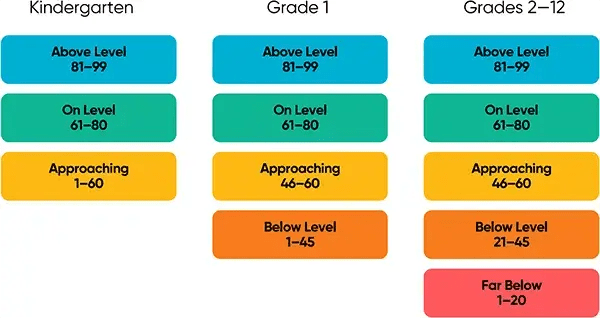
Understanding the typical Lexile range by grade can be helpful when selecting books for students. Here’s a general guide:
Kindergarten to Grade 1
- Lexile Range: BR (Beginning Reader) to 300L
- At this level, students are just learning how to read. Books with simple vocabulary, pictures, and short sentences are best.
Grade 2 to Grade 3
- Lexile Range: 140L to 650L
- Students start reading more independently. Stories may include simple paragraphs and early chapter books.
Grade 4 to Grade 5
- Lexile Range: 445L to 810L
- Readers can handle more complex sentence structures and vocabulary. Nonfiction becomes more common in classroom reading.
Grade 6 to Grade 8
- Lexile Range: 665L to 1000L
- At this stage, students are expected to think more critically and analyze texts. Both fiction and nonfiction texts include more abstract ideas.
Grade 9 to Grade 10
- Lexile Range: 855L to 1165L
- High school students engage with literature, history, and scientific texts. They interpret themes and arguments in deeper ways.
Grade 11 to Grade 12
- Lexile Range: 960L to 1210L+
- Seniors and juniors read complex texts in preparation for college. Lexile levels at this stage are aligned with college and career readiness.
Tips for Using the Lexile Chart
1. Use it as a Guide, Not a Rule
A student’s Lexile score is a helpful tool, but it shouldn’t be the only factor in selecting reading material. Interests, background knowledge, and motivation also play a big role in comprehension.
2. Monitor Progress Over Time
Tracking Lexile levels from year to year can help educators and parents identify reading improvement or areas that need more focus.
3. Encourage Reading Above and Below the Level
Sometimes a student may enjoy a book slightly below their Lexile level, which builds confidence. Reading slightly above can also challenge them—just make sure it’s not too frustrating.
Final Thoughts
The Lexile Reading Levels by Grade Chart is a useful reference for educators and families. It offers a framework for supporting students in becoming confident, capable readers. By understanding where a student stands and what they need, we can help foster a love of reading that lasts a lifetime.
 Reading Lexile Levels by Grade Chart